Staining & Refinishing
Staining and Natural Wood Finishes
Staining is for the wood you want to keep looking like wood. We stain and clear-coat interior trim, doors, mantels, built-ins, railings, stair parts and porch ceilings, and we re-coat existing stain that has gone tired or blotchy. It is slower work than paint because wood shows everything — which is exactly why it is worth having someone do it who is not in a hurry.
What we stain and finish
Interior trim and doors
Baseboards, casing, crown and solid interior doors.
Mantels and built-ins
Bookcases, window seats, shelving and fireplace surrounds.
Railings and stair parts
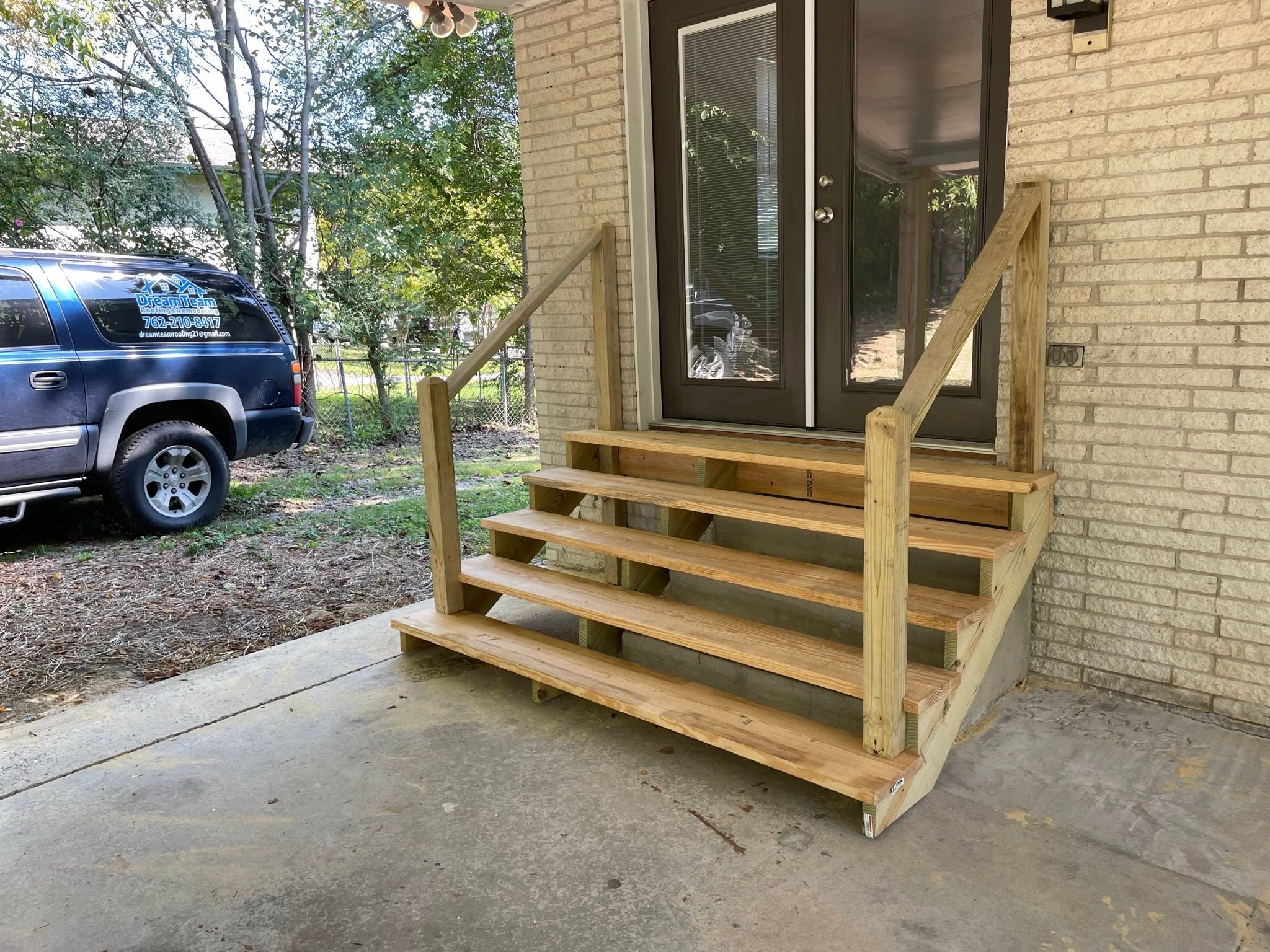
Handrails, newel posts and balusters, including spot re-coating on wear points.
Porch and cabin ceilings
Tongue-and-groove ceilings and beams, sealed against mountain humidity.
Re-coating existing stain
Sanded back and brought level before anything new goes on.
Clear-coat protection
Matched to how much traffic and sun the surface actually gets.
Why blotchy stain happens
Softwoods like pine take stain unevenly — the grain drinks it in some places and resists it in others, which is where the blotching comes from. The fix is a wood conditioner before the stain and a light sand between coats, and it is the step that separates a finish that looks deliberate from one that looks patchy. On cabin ceilings and pine trim, which is a lot of what we see in north Georgia, it matters more than the stain colour does.
Common questions
Can you match a stain colour to the wood I already have?
Usually, yes. We test on an offcut or a hidden section first and adjust before touching anything visible, because stain reads differently on different species and on wood of different ages. An exact match on wood that has darkened for twenty years is not always possible, and we will tell you when a blend is the better outcome.
Can you stain over an existing stain or finish?
Sometimes, but not by simply brushing over it. Existing clear-coat has to come off or be sanded back or the new stain will sit on top and never bond. Going darker over an existing stain is straightforward; going lighter means stripping, which is a different job with a different price.
Tell us what you are looking to have done and we will come and look at it. Estimates are free and itemised.